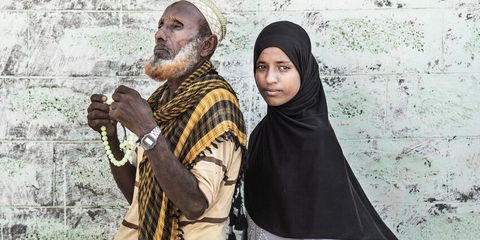
We make sure girls have the power, knowledge, and support to make informed choices about their bodies, health, and futures in every community and every crisis.
Health professional who provides SRH services.
Across Ethiopia, many girls still struggle to make choices about their own bodies and health. In many cases, conflict, displacement, harmful traditions, and limited health services put them at greater risk of early pregnancy, child marriage, female genital cutting, and violence.
As a result, these realities take away girls’ choices and put their futures at risk.
But girls are speaking up and we are backing them.
Why this work matters now
Many young people still cannot reach safe, private, and youth-friendly health services. In particular, during emergencies, health facilities are often damaged or too far away, leaving girls without critical care or protection.
Moreover, during times of crisis, practices like child marriage and female genital cutting often increase, as families face poverty, fear, and uncertainty.
Our approach: standing with girls, supporting every part of their journey
We support every part of a girl’s life so she can stay healthy, safe and in control of her future.
Removing barriers to care
We support girls seek care, and we make sure services are available, safe and welcoming.
Creating supportive environments
Work with families, boys, men and community leaders
Challenge harmful beliefs and traditions
Promote equality and respect.
Improving services and systems
Strengthen health facilities and outreach services
Support youth-friendly care
Ensure services are accessible and respectful.
Supporting youth leadership
Young people are at the centre of everything we do.
Girls and young people lead, speak up and influence decisions.
Using evidence to influence change
Work with government and partners
Advocate for better laws and policies.
What makes our work different
We put girls and young people at the center, and by working alongside communities, to create lasting change, even in the toughest situations.
We start with communities, not projects
In practice, we work closely with:
Families
Faith and traditional leaders
Local organisations.
Putting girls first, and focus on what works
Our work is based on evidence, we focus on what has been proven to improve girls’ lives
We challenge inequality through gender-transformative programming, helping shift harmful norms, not just symptoms.
Helping young people build confidence and lead change
We support girls and young people to:
Understand their bodies and health
Build life skills and confidence
Speak up and make informed decisions
In addition, we also support them to challenge harmful practices, including:
Child marriage and CEFM – child, early and forced marriage
Female genital mutilation (FGM).
Making services work for girls
We support health facilities to provide youth-friendly care, counselling, and contraception
We help survivors of violence find and access support safely
Overall, we improve services so they are accessible, available, acceptable, and high quality.
Protecting girls at risk
Emotional support and counselling
Safe spaces
Skills and opportunities to rebuild their lives.
Working to end harmful practices
Challenge harmful norms and beliefs
Support survivors
Promote girls’ rights and equality.
Supporting local leadership and youth-led change
We strengthen:
Youth groups and councils
Local organisations.
Influencing systems and policies
Advocate for stronger laws and enforcement
Improve funding and access to services
Make sure girls’ voices are heard in decisions that affect them.
Rresponding in crises, and stay for the long term
We respond quickly by providing:
Mobile and outreach health services
Protection and support for survivors
Partnerships with local authorities and health workers
At the same time, our approach, humanitarian–development integration means we:
Provide urgent support now
Build long-term solutions for the future
In addition, we apply global emergency standards such as:
MISP (minimum life-saving sexual and reproductive health services) for SRH (sexual and reproductive health)
R2R (Ready to Respond)
Working across sectors to support the whole girl
Clean water and sanitation (WASH)
Health and nutrition (H&N)
Education
Child protection (CPiE)
Economic opportunities for youth (YEE)
What this looks like in real life
2.9 million+ people reached with SRH and protection services
96% of adolescents report services as respectful and youth-friendly
78% of young people show improved decision-making power
54% increase in access for adolescents with disabilities
We work alongside girls and families so they can drink clean water, use safe toilets, and live healthy, dignified lives no matter where they live or what eme…
In Afar, Ethiopia, baby girls are often subjected to painful and life-threatening FGM as early as one week after birth. But families are working together to …
We use functional cookies to make this site work. We’d also like to set optional cookies to measure site usage, personalise content and tailor advertising to your interests. To choose which cookies to enable, click on Settings. For information about the cookies we use, see our Privacy Policy and Cookie Notice.