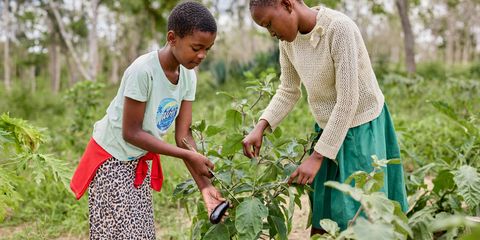
Protect girls and women from climate shocks
9 April 2026Hunger places girls at heightened risk of child labour, early and forced child marriage, gender-based violence, sexual exploitation, unwanted pregnancy and female genital mutilation as families and girls adopt negative coping mechanisms to survive. Blog by George Otim, Country Director, Plan International Kenya.

Several counties, especially those in the Arid and Semi-Arid Lands (ASAL) continue to experience recurrent episodes of food insecurity due to climate-related shocks affecting the country. Crops have turned into dust and livestock continue to suffer from lack of pasture as the rains have repeatedly failed.
In the January 2026 drought bulletin by the National Disaster Management Authority [NDMA] indicated that, “Drought conditions continued to worsen across most ASAL counties, driven by persistent hot and dry weather throughout January. Mandera, Wajir, Kwale, and Kilifi were classified in the Alarm phase, while 13 counties — including Turkana, Marsabit, Samburu, Isiolo, Baringo, Laikipia, Tharaka, Kajiado, Taita Taveta, Kitui, Tana River, Garissa, and Lamu —were in the Alert phase.”
“An estimated 3.3 million people currently food insecure across ASAL counties, particularly in Mandera, Wajir, Garissa, Turkana, and Marsabit. Significant numbers of children aged 6 to 59 months and pregnant and breastfeeding women require urgent malnutrition treatment.”
From our recent scoping visit to Garissa County to understand the multi-sectoral needs of households, it is evident that the drought situation has negatively impacted livelihoods. Food insecurity, poor water sanitation and hygiene (WASH), limited access to education and nutrition, and protection risks remain some of the biggest challenges affecting the vulnerable populations.
Children and their mothers, adolescent girls, women and persons with disabilities continue to bear the brunt of drought crisis. Data collected from the respondents reveal that lack of access to food is the most pressing need, reported by 90% of the households, weak access to essential services such as access to health services was recorded at 66% and 55% reporting lack of access to education.
These findings underscore the severity of the hunger crisis in 17 counties of our country, a clear indication of early onset of negative impacts to affected populations.
Girls become heads of households
Impacted livelihoods exacerbate protection risks, particularly for adolescent girls; where, while learning goes on uninterrupted in many schools, girls in crisis are left to assume responsibility for their siblings, as their parents and guardians walk to far-flung distances in search of food and pasture.
Uncertain when their parents would return to their homes, the adolescent girls become the heads of households — literally — ensuring that their siblings are fed from the little foodstuff left and wondering how and where from to replenish the same.
Hunger crisis due to drought or flood calamities expose children, girls and women to an unsafe environments and restricting their freedom and safety.
Hunger also places girls at heightened risk of child labour, early and forced child marriage by their parents or guardians, gender-based violence, sexual exploitation, unwanted pregnancy and female genital mutilation as families and girls adopt negative coping mechanisms to survive.
Humanitarian-response mechanisms
To address the grip of the devastating hunger crisis, Plan International, through its mobilised donor network is rapidly scaling up its response to the greatest challenge of our generation.
Target areas of drought-response include Garissa, Turkana, Marsabit, isiolo, Kilifi and Kwale counties through distribution of lifesaving food supplies and non-food items. We are rapidly scaling up programmes such as nutrition support, cash and voucher assistance, food distributions, child protection, school meal programmes and livelihoods support guided by the Situational Report.
A call to action
“Humanitarian organisations continue to face an impossible choice between feeding the hungry and feeding the starving.”
George Otim, Country Director, Plan International Kenya
As the world commemorates International Women’s Day themed ‘Rights. Justice. Action. For all women and girls’ according to the United Nations calendar, there is need to address risks associated with physical, sexual or mental health.
Humanitarian organisations continue to face an impossible choice between feeding the hungry and feeding the starving. A multi-sectoral approach is required to address these challenges associated with the unprecedented climate change. We need to work collaboratively to promote women’s rights and address inequalities that derail them from realising their full potential.
Let us all join hands to ensure that children, girls and women are safeguarded in safe spaces — both in public and household spaces, are provided with life‑saving assistance, early recovery and resilience‑building support, as well as access to formal legal pathways.
These interventions will create a world where girls and women thrive in prosperity and sustainable initiatives that close gender gaps.
Categories: Emergencies
Related pages