Lebanon’s displaced children speak out
26 March 2026We spoke to the newly displaced children and families of Lebanon to understand how they are staying strong despite being unsettled by conflict.
Across Lebanon, families forced from their homes are living through uncertainty, fear, and loss. Yet within the crowded shelters where thousands now seek safety, moments of humanity continue to shine through. Children find fragments of their childhood to hold on to. Mothers carry the weight of survival with remarkable strength. Teenagers dream of futures that feel painfully far away but still possible.
These are the voices of the girls, boys and families whose lives changed overnight, but whose resilience speaks louder than the conflict around them.
“I wish I could keep going on my roller skates… all the way back home.”
– Amal, 11.
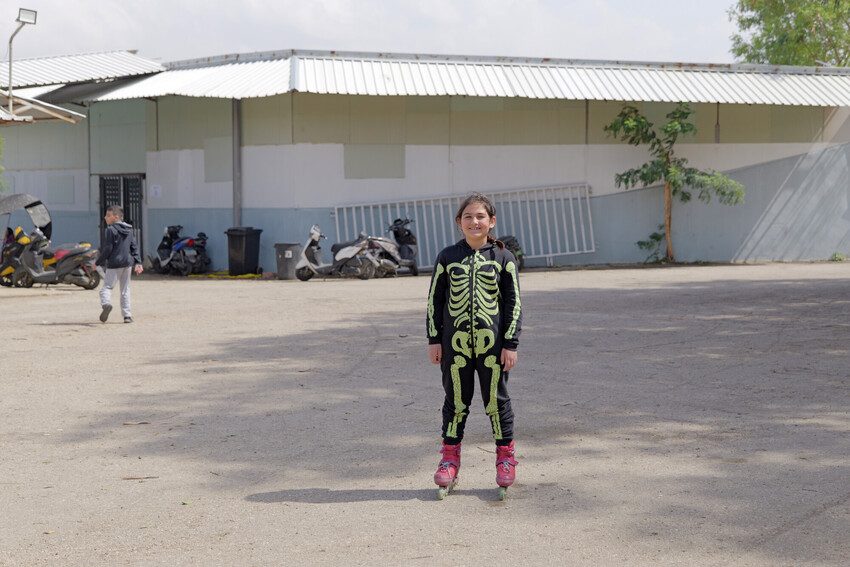
11-year-old Amal arrived at the shelter carrying something small but deeply meaningful: her roller skates. In a place overflowing with noise and uncertainty, skating gives her a moment that feels like her own. As she glides, the air brushing past her face, she feels free – as if the weight of displacement momentarily lifts.
But when she slows down, reality returns. “I wish I could keep going on my roller skates… all the way back home. But I don’t even know if my home is still there.”
Her skates are no longer just a hobby; they are her escape from the worries of her new reality.
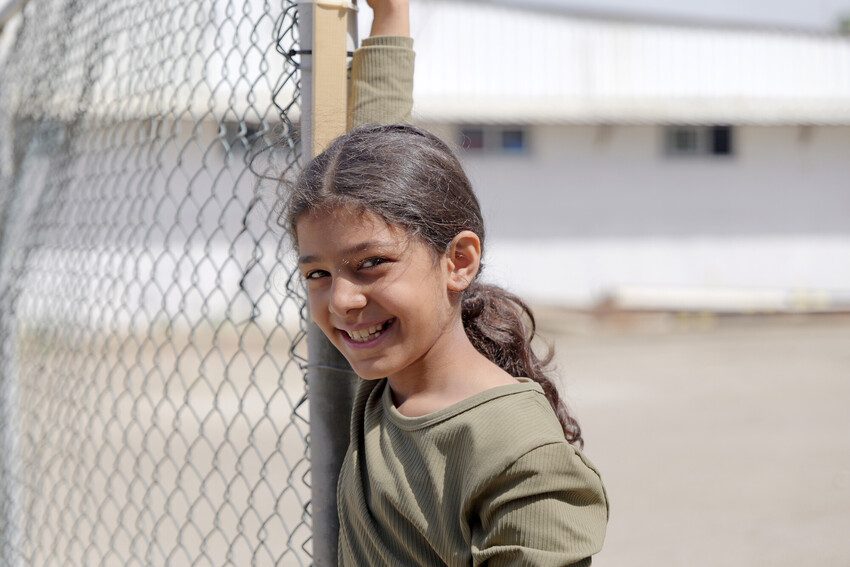
Laila, 8, loved going to school. Each morning she chose her favourite outfit, usually her pink t-shirt that made her feel excited for the day. But when her family fled their home, there was no time to pack, not even her beloved shirt.
In the shelter, she still wonders if it’s waiting for her back home, neatly folded in her room.
What you notice first about Laila, however, isn’t her loss, it’s her bright smile. “Take a picture of me,” she insists, standing proudly. She wants her story to be told.
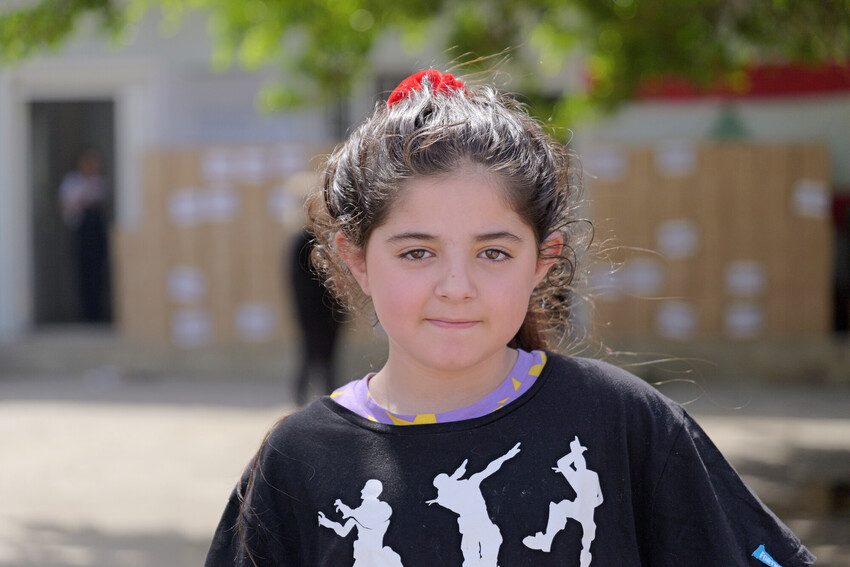
“I wanted to come and live in Beirut… but not in a shelter.”
– Amani, 8.
8-year-old Amani always imagined Beirut as a place full of opportunity, somewhere she hoped to live one day. Now she is in Beirut, but not in the way she dreamed. She is living in an IDP shelter, far from the sense of possibility she once associated with the city. “I wanted to come live in Beirut… but not in a shelter,” she says quietly.
Still, Amani looks forward. Watching the Plan International team working around her, she says: “One day, I want to grow up and become like you… and help people like us.”

Hani, 9, and Youssef, 6, met in the shelter. Despite their age difference, they quickly became inseparable. In a space with little room to play and nothing familiar around them, the two boys create their own moments of joy.
They laugh, joke, and share stories as if they’ve known each other forever. “When I return home,” Youssef says, “I want Hani to come with me.” In the middle of displacement, their friendship has become the one steady thing they can rely on.

Mariam, 35, a mother of three, carries the heavy burden of displacement while caring for her youngest son, Jad, 5, who has autism. Before the crisis, he was attending a specialised centre and slowly making progress. With structure and support, he was beginning to adapt.
When they fled their home, those routines disappeared. In the shelter, Jad struggles with unfamiliar surroundings. He prefers to walk barefoot, finding comfort in what he knows. Her other children ask why they had to leave, and when life will return to normal. Her husband has lost his job.
Yet every time Mariam speaks, she smiles, a quiet strength holding her family together.
Related pages