How to be a gender equality and LGBTIQ+ ally
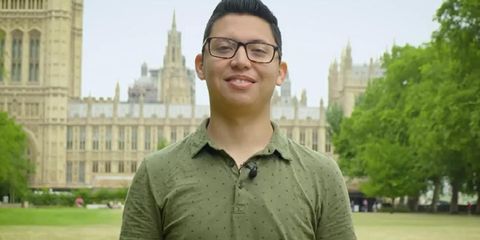
Gonzalo shares his top tips on how you can be both a gender equality and LGBTIQ+ ally.
We believe all children and young people should be able to live a life free from discrimination, violence and stigma, in all their diversity and regardless of their sexual orientation, gender identity and expression and sex characteristics (SOGIESC).
But the world is failing young people with diverse SOGIESC. Across the globe, they are among the most marginalised and excluded. Many face daily stigma, violence and discrimination simply for being who they are, or who others believe them to be.
Discrimination is often intensified by other forms of inequality, including racism, ableism and imperialism. These overlapping barriers limit their choices, safety and freedom — and can shape their lives for years to come.
Too many children and young people with diverse SOGIESC are still pushed to the margins of society. This exclusion damages their wellbeing, restricts their access to education and services, and undermines their ability to thrive.
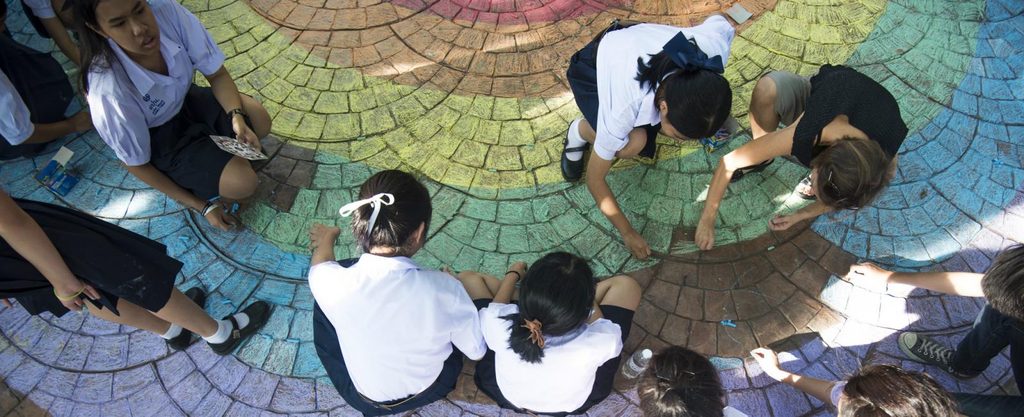
Children create a chalk rainbow on International Day against Homophobia, Biphobia and Transphobia, Thailand. Photo credit: UNAIDS / A.Martin.
Plan International uses the term SOGIESC to include people whose identities may not be reflected within LGBTIQ+ categories. Language differs across cultures, and people may use different terms – or prefer no label at all.
We respect these choices and adapt our language to reflect local contexts, ensuring that people with diverse SOGIESC are recognised, respected and included.
Young people with diverse SOGIESC are at risk of stigma, discrimination and violence, often to an extreme level. This is fuelled by harmful social norms and practices, legal challenges and gender inequality.
For young people with diverse SOGIESC, these challenges are often made worse by racism, imperialism, colonialism and ableism. Gender inequality intersects with discrimination based on identity, deepening exclusion and limiting access to education, health care and protection.
Harmful beliefs are sometimes reinforced by people closest to young people — including peers, parents, teachers or religious leaders. Yet these same groups can also become powerful allies for change, helping create safer, more inclusive communities where all children can belong.
In 2024, we launched our policy position on People with Diverse SOGIESC, which goes hand in hand with our work to advance gender equality and inclusion.
In recent years, anti-gender movements have increasingly challenged the rights of people with diverse SOGIESC, including children and young people. These movements pose obstacles to gender equality and sexual and reproductive health and rights. They have opposed reforms on issues such as same-sex partnerships, inclusive education, abortion, and trans rights, and in some cases influenced state institutions and policies, significantly impacting the rights of children, young people, and families.
A new module in our Champions of Change programme supports young people to openly discuss sexual orientation and gender identity, understand their rights and build the confidence to stand with — and speak up for — LGBTIQ+ young people.
Through these conversations, young people are supported to challenge harmful norms, lead change in their communities and demand equality.
Discrimination and stigma undermine the rights of LGBTIQ+ youth and threaten their safety. Bullying and exclusion can force young people out of school, damage their self‑esteem and limit their future opportunities.
For some, rejection and violence increase the risk of homelessness or force young people into unsafe situations simply to survive.
LGBTIQ+ youth are at heightened risk of verbal, physical and sexual abuse — yet many struggle to access protection or support from systems meant to keep them safe.
Accessing sexual and reproductive health services can also be harder due to discrimination or a lack of understanding among service providers. Where sex education exists, it is often based on the assumption that everyone is heterosexual and cisgendered – leaving LGBTIQ+ young people without the information they need to protect their health and rights.
There are often extra challenges in accessing proper sexual health services due to discrimination or lack of expertise among service providers. Sex education, if there is any at all, is often heteronormative (seeing heterosexuality as the norm in society) and not address the needs of LGBTIQ+ youth.
In 2014, Plan International Thailand, UNESCO and Mahidol University carried out research into homophobic and transphobic bullying in secondary schools. The findings revealed serious gaps in protection for students who identify as – or are perceived to be – LGBTIQ+.
This research led to a three‑year programme working with students, parents, schools, local organisations and the government to reduce violence, challenge harmful attitudes and make schools safer for LGBTIQ+ youth.
Our Champions of Change programme works in 20 countries to advance gender equality by backing girls to lead, while engaging boys and communities to challenge harmful ideas about power and masculinity.