Supporting women to take the lead in renewable energy
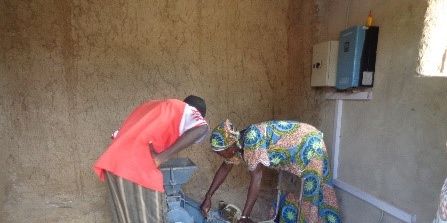
In Senegal, Mali and Niger women are tackling stereotypes and becoming successful energy entrepreneurs!
Girls and young women make up the majority of the world’s 65 million unemployed young people who have neither an education nor vocational training.
Barriers caused by gender inequality and discrimination are preventing girls from going to school and getting the skills they need to access decent work and break out of poverty.

The world is failing girls economically. In developing countries, girls’ jobs are often vulnerable, informal and unprotected. Girls are more likely to be paid lower wages – if they are paid at all – and be the first to lose their jobs. Globally, women receive 20% less pay than men for the same work, and often have worse working conditions.
Most of the work girls and young women carry out is unseen and undervalued. They perform the majority of care and domestic work, and prior to COVID-19, they doubled or even tripled the length of their working day, an unfair burden that rose during the pandemic.
Girls also face barriers to the digital economy and are 5 times less likely than boys to even consider a career related to technology.
Investing in girls’ economic empowerment is essential to achieving gender equality. Enabling girls to learn throughout their lives and develop key skills can transform lives, communities and entire countries.
Each extra year of education boosts a girl’s wages by up to 20%. Young women with secondary education could expect to make almost twice as much as those with no education.
In addition, research shows that women’s education is linked to health benefits for their children – they are more able to keep their children healthy, safe and educated.
The economic empowerment of girls must start early – when gender stereotyping begins – and must continue throughout their lives.
This includes dedicated efforts to challenge perceptions about what it is acceptable for women to do, providing vocational training and life skills, access to loans and savings groups, and education on how money works.
We support every part of a girl’s world — backing her to learn, earn, lead and decide her own future, while working with families and communities to dismantle what holds her back.